
Culture
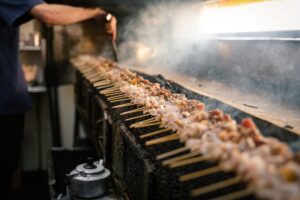
Yakitori vs Yakiton – Japan’s Beloved Grilled Skewers
Walking through Japanese nightlife districts, you’ll smell grilled meat long before you see the restaurant. Yakitori and yakiton are staples of casual dining, especially at izakaya. What Is Yakitori? Yakitori literally means “grilled chicken.” Almost every part of the chicken is used, reflecting Japan’s philosophy of minimizing waste. Popular Yakitori Cuts Famous Yakitori Areas What […]

What Is Sabi of Wabisabi?
The Beauty of Time, Aging, and Quiet Depth Introduction: Why Old Things Matter in Japan Sabi is the second half of wabi-sabi, and it focuses on time. While wabi is about imperfection, sabi is about aging — the beauty that emerges as objects, places, and people grow older. In Japan, age does not automatically mean […]

What Is Wabi of Wabisabi?
The Japanese Beauty of Imperfection and Simplicity Introduction: Finding Beauty in What Is Not Perfect When people talk about wabi-sabi, they often treat it as one word.However, wabi and sabi are two different ideas. Wabi refers to a uniquely Japanese sense of beauty that finds value in simplicity, imperfection, and incompleteness.Rather than seeking luxury or […]
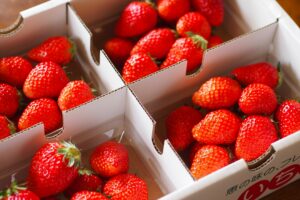
Japanese Fruit Breeding – How Japan Perfected Flavor, Beauty, and Texture
Japan is world-famous for its high-quality fruit, often described as some of the best in the world. Behind this reputation lies decades of careful fruit breeding (varietal improvement), focusing not on mass production, but on taste, appearance, texture, and consistency. This article explores how Japan has refined fruit through breeding, using strawberries, Shine Muscat grapes, […]
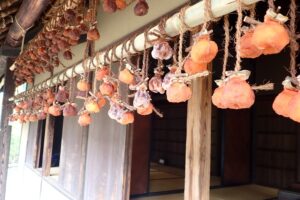
Traditional Japanese Fruits – A Taste of Seasonality and Craftsmanship
Japan is known not only for its refined cuisine but also for its unique fruit culture. Traditional Japanese fruits are deeply connected to seasonality, regional identity, and a strong respect for nature.Unlike mass-produced fruit found elsewhere, many Japanese fruits are carefully cultivated, often treated as seasonal delicacies or even luxury gifts. This article introduces some […]
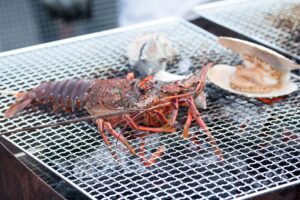
Japanese Shrimp Culture – A Guide to Ise Ebi, Kuruma Ebi, and Ama Ebi
Shrimp (ebi) plays an important role in Japanese cuisine, symbolizing celebration, elegance, and refined flavor. From luxurious sashimi to classic tempura, Japanese shrimp dishes focus on freshness, texture, and natural sweetness rather than heavy seasoning. This article introduces some of the most popular types of shrimp enjoyed in Japan and how they are traditionally prepared. […]
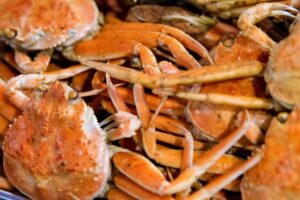
Japanese Crab Culture – A Guide to Taraba, Zuwai, and Kegani
Japan is famous for its seafood, and crab (kani) holds a very special place in Japanese cuisine. From winter delicacies enjoyed at hot spring towns to luxurious kaiseki meals, crab is deeply connected to seasonality, regional pride, and refined flavors.In this article, we introduce the most popular types of crab enjoyed in Japan and how […]
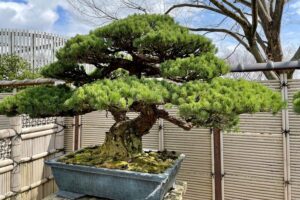
What Is Bonsai? – A Simple Introduction to Japan’s Living Art
Bonsai is often described as a miniature tree, but in Japan, it is understood as something much deeper.Bonsai is a living art form that reflects patience, balance, and a close relationship with nature. In this article, we explain what bonsai is, where it comes from, and why it continues to fascinate people around the world. […]
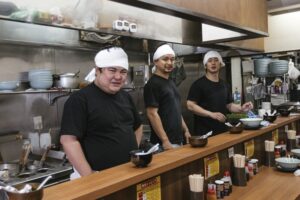
What Does “Irasshaimase” Mean? – Why Japanese Staff Say It So Often
If you visit Japan, one of the first Japanese words you will hear is “Irasshaimase.”You’ll hear it the moment you step into a shop, restaurant, izakaya, or convenience store. Staff may say it loudly, cheerfully, or even in unison. For many visitors, it can feel surprising or even overwhelming. So what does irasshaimase actually mean—and […]

What Does “Yabai” Mean? – Understanding One of Japan’s Most Versatile Words
If you spend even a short time in Japan, you’ll almost certainly hear the word “yabai.” You might hear it in restaurants, on the street, in anime, or from young people chatting with friends. At first, it can be confusing—sometimes it sounds good, sometimes bad, and sometimes both at once. So, what does yabai actually […]