A Comparison of Zojoji and Kaneiji – Two Temples Deeply Connected to the Tokugawa Family
 melomelotours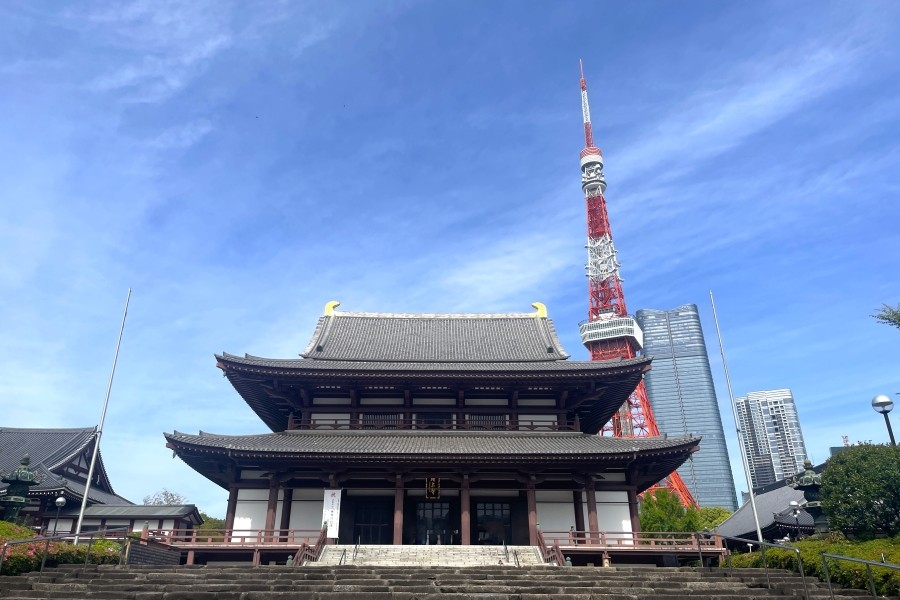
Tokyo is home to many temples closely associated with the Tokugawa family, the rulers who established the Edo Shogunate. Among them, Zojoji and Kaneiji stand out as especially important.
Both temples are known as Tokugawa family temples where shoguns are buried, yet their locations, roles, and atmospheres are clearly different.
In this article, we compare these two temples from the perspectives of history, function, and highlights.
Zojoji (Shiba) — The Official Family Temple of the Shoguns —
Zojoji was originally founded in 1393 and later became the official family temple of the Tokugawa clan after Tokugawa Ieyasu entered Edo. Today, it is famously located right next to Tokyo Tower, creating a striking visual contrast.
Relationship with the Tokugawa Family
- The official Tokugawa family temple
- Burial site of six Tokugawa shoguns
- Venue for many official memorial services and ceremonies
Zojoji functioned as the “front-facing” temple that publicly displayed the authority and prestige of the Tokugawa shogunate.
Highlights and Atmosphere
- Dramatic contrast between Tokyo Tower and the main hall
- Neatly arranged Tokugawa family graves
- Open, welcoming atmosphere with many visitors
It is a highly photogenic temple where history and modern Tokyo intersect.
Kaneiji (Ueno)
— The “Northern Guardian” of Edo Castle —
Kaneiji was founded in 1625 by Tenkai, a powerful Buddhist monk and close advisor to Tokugawa Ieyasu. The temple once occupied a vast area that now largely forms Ueno Park.
Relationship with the Tokugawa Family
- Positioned to protect the northeast (kimon) of Edo Castle, believed to be an unlucky direction
- Tenkai spiritually supported Ieyasu, Hidetada, and Iemitsu
- Six Tokugawa shoguns are buried at Kaneiji
During the Edo period, when politics and religion were deeply intertwined, Kaneiji played a crucial role as a spiritual shield for the shogunate.
Highlights and Atmosphere
- Temple buildings scattered within Ueno Park
- Tokugawa Shoguns’ Mausoleum, solemn and dignified
- Famous cherry blossom spot in spring
Overall, Kaneiji is quiet and contemplative, allowing visitors to feel the weight of history.
Comparison: Zojoji vs. Kaneiji
| Category | Zojoji | Kaneiji |
|---|---|---|
| Location | Shiba (next to Tokyo Tower) | Ueno |
| Role | Tokugawa family temple | Spiritual protection of Edo Castle |
| Background | Promoted by Ieyasu as a key religious center | Founded by Tenkai for spiritual defense |
| Shoguns Buried | 6 | 6 |
| Atmosphere | Open, symbolic | Quiet, solemn |
| Ease of Visiting | Very high | Moderate |
What These Two Temples Reveal About the Tokugawa Worldview
Zojoji and Kaneiji are far more than historical temples.
- Zojoji = Visible authority (rituals and symbolism)
- Kaneiji = Invisible protection (spiritual power and geomancy)
This contrast shows how carefully the Tokugawa shogunate used religion and urban design to support and legitimize its rule.
Tips for Travelers
- History lovers → Visit both temples to fully understand the contrast
- Photography and easy sightseeing → Zojoji
- Quiet historical atmosphere → Kaneiji
Both temples are easily accessible from central Tokyo and can be visited within half a day.
Conclusion
Although Zojoji and Kaneiji are both deeply connected to the Tokugawa shoguns, their roles, locations, and atmospheres are remarkably different. By comparing them, visitors can better understand how Edo was designed and how the Tokugawa family governed Japan through a balance of power, belief, and symbolism.
When visiting Tokyo, take time to explore these two temples and reflect on the legacy of the Tokugawa era.
\ Get the latest news /